
Is Your Chair Ageing Your Body? How To "Pilates-Proof" Your Favourite Seat
Aug 09, 2026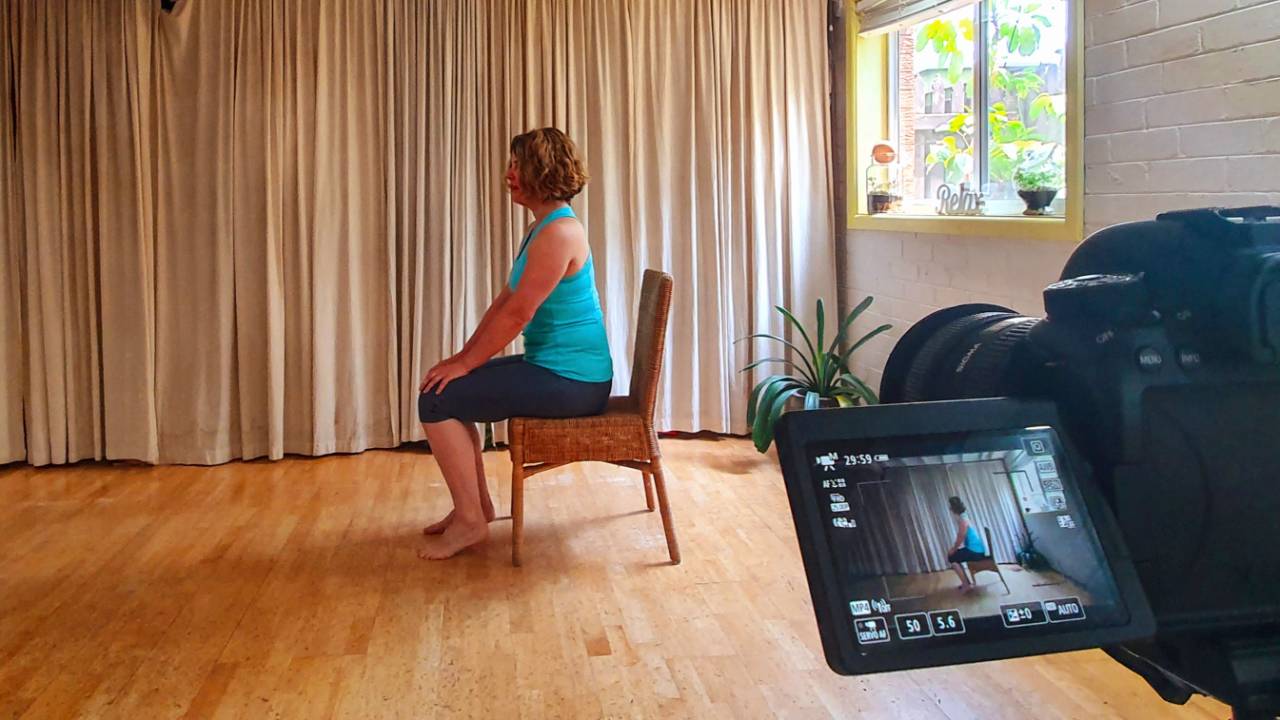
We often think of ageing and joint stiffness as things that happen while we are moving. We blame the long walk, the heavy lifting, or the weather. But as a Pilates practitioner of over twenty years, I will let you in on a secret: it is often what we do while we are completely still that ages our bodies the fastest. Recently, I was able to advise one of my clients whose home office chair was repeatedly causing her pain. The chair is in the room where she does her virtual sessions, so I could clearly see the issues she was facing. We took steps to make it more supportive for her during the long hours she works in her home-based business.
Think about your absolute favourite spot to sit. Is it a plush, comfy armchair? The driver’s seat of your car? Or perhaps a kitchen stool where you have your morning cuppa? If you are living with chronic pain, or simply trying to age with strength and grace, that favourite chair might actually be working against you. When a seat forces your body into poor alignment, it acts like a slow-motion strain on your spine, hips, and neck. The good news? You don't need to throw out your furniture. You just need to "Pilates-proof" it. Here are three quick checks to run on your favourite seat today.
1. The Hip-to-Knee Check (Protecting the Lower Back)
When you sit down, take a look at your profile. Are your hips sinking down lower than your knees? This is incredibly common in deep, soft couches and modern armchairs.
- The Problem: When your hips drop below your knees, your pelvis is forced to tilt backwards (a posterior tilt). This completely flattens the natural curve of your lower back, overstretching the muscles and placing massive pressure on your spinal discs. It is a one-way ticket to a stiff lower back when you try to stand up.
- The Pilates Fix: Your hips should ideally be level with, or slightly higher than, your knees.
- How to Modify: Place a firm, folded blanket or a wedge cushion onto the seat. This lifts your pelvis, restores your lumbar curve, and instantly unburdens your lower back.
2. The "Bucket" Couch Trap (Finding Your Sit-Bones)
In Pilates, we talk a lot about the "sit-bones" (the ischial tuberosities). They are the structural pillars built to carry your weight when seated.
- The Problem: Soft, plush chairs cause our sit-bones to slide forward, forcing us to slouch and sit on our tailbone (sacrum) instead. This collapses the deep core muscles and forces your upper back to round out into a slump.
- The Pilates Fix: Slide your bottom all the way to the very back of the chair before you lean back.
- How to Modify: Take a small, rolled-up hand towel and place it horizontally right behind your lower back (just above your waistband). This gentle support prevents your spine from collapsing into the "bucket" of the chair and keeps your core subtly supported without any extra effort.
3. The Armrest & Screen (Saving Your Neck and Shoulders)
If you are reading, knitting, or using a phone while sitting in your favourite chair, your neck and shoulders are likely paying the price.
- The Problem: If the armrests are too low (or non-existent), your elbows dangle. This pulls down on the trapezius muscles in your shoulders, leading to tension headaches and a stiff neck. Furthermore, if you are looking down into your lap, your neck muscles are working quadruple time to hold up your head.
- The Pilates Fix: Bring the environment to your eyes, rather than your eyes to the environment.
- How to Modify: Place a plump cushion or a bed pillow across your lap. Rest your elbows on it to support the weight of your arms, and use it to prop up your book, iPad, or knitting. Your shoulders will instantly drop away from your ears.
Small Changes, Lasting Comfort
Functional movement isn't just about what we do on the Pilates mat; it’s about how we support our bodies through the demands of daily life. Take a look at your favourite chair today. By making a few small adjustments to where you sit each day, you turn your rest into a time of true recovery rather than a source of hidden strain.
If you are ready to learn more about overcoming pain and ageing well and are ready to start your Pilates journey, email me at [email protected]
Alternatively, you can book your in-depth Initial Assessment with me via Teams, or work independently at your own pace through my library of on-demand videos. Take the free 10 day trial and start now. It would be my pleasure to assist you in staying strong, healthy, and pain-free as you age!
Alternatively, you can book your in-depth Initial Assessment with me via Teams, or work independently at your own pace through my library of on-demand videos. Take the free 10 day trial and start now. It would be my pleasure to assist you in staying strong, healthy, and pain-free as you age!
If you are ready to take control of your own health and fitness then download your free copy of my detailed guide.
Learn more about what sort of people benefit from Pilates and how it can help you too. I separate the myths from the facts and share actual case studies of my clients who have achieved life-changing results from my unique Pilates program.
